How Metal Roofing Interacts with Attic Insulation Systems
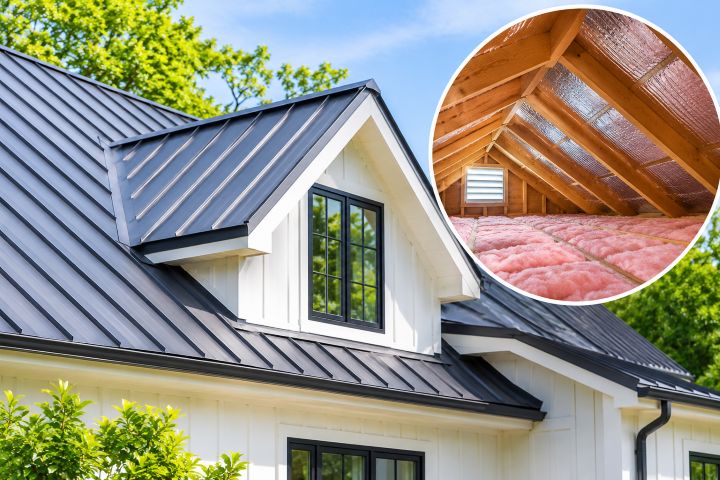
A well-designed roofing system does more than protect a home from rain, wind, and sunlight. It also influences indoor temperatures, attic ventilation, and overall energy efficiency. While metal roofing is known for its durability and long service life, its interaction with attic insulation plays a key role in maintaining a comfortable living environment.
For homeowners working with a Sunnyvale, CA roofing company, understanding how metal roofing and attic insulation function together can help them make informed decisions about roof replacements and home improvements. When installed properly, these components work as part of an integrated system that regulates heat transfer, manages moisture, and supports year-round comfort.
Understanding the Relationship Between Metal Roofing and Attic Insulation
Metal roofing and attic insulation serve different purposes, but their performance is closely connected.
Metal roofing forms the roof assembly’s outer protective layer. It helps shield the home from environmental conditions while influencing how solar heat interacts with the building.
Attic insulation, on the other hand, reduces heat transfer between conditioned living spaces and the attic or roof assembly.
Together, these components help manage thermal performance in several ways:
- Solar heat management: Metal roofing finishes can influence how much sunlight is absorbed or reflected.
- Heat transfer reduction: Attic insulation slows heat transfer into and out of living areas.
- Indoor temperature stability: Proper insulation helps reduce temperature fluctuations throughout the home.
- Moisture management: Correct ventilation and air sealing help limit conditions that encourage condensation.
- Energy efficiency: A properly designed roof and insulation system can reduce heating and cooling demands.
The effectiveness of these components depends on material selection, installation quality, and the home’s overall construction.
How Metal Roofing Affects Attic Temperatures
Roofing materials absorb and release solar energy differently. On sunny days, heat from the roof surface can move through the roof assembly and affect attic temperatures.
Metal roofing responds to solar radiation based on several characteristics, including surface color, reflectivity, emissivity, and installation configuration.
Reflective Metal Roofing Finishes
Some metal roofing products feature specially formulated finishes designed to reflect more solar radiation.
These finishes can reduce heat absorption, especially during Sunnyvale’s warm, sunny summer months.
Important considerations include:
- Solar reflectance: Indicates how much incoming solar energy a surface reflects.
- Thermal emittance: Describes how effectively a surface releases absorbed heat.
- Roof color: Different finishes can influence surface temperatures.
- Ventilated roof assemblies: Certain installation configurations provide air spaces that help manage heat transfer.
However, not every metal roof delivers the same thermal performance. Homeowners should review product ratings and installation specifications when comparing roofing options.
Why Attic Insulation Matters Beneath Metal Roofing
Even when roofing materials reflect sunlight effectively, some heat can still enter the roof assembly.
Attic insulation helps slow this heat movement and limits its effect on conditioned living spaces.
During warmer months, insulation reduces heat transfer from the attic toward the rooms below. During cooler weather, it helps retain indoor warmth.
Common attic insulation materials include:
- Fiberglass batts: Preformed insulation sections commonly installed between framing members.
- Blown-in fiberglass: Loose-fill insulation distributed across attic floors or other approved spaces.
- Cellulose insulation: Fiber-based insulation used to fill cavities and provide thermal resistance.
- Spray foam insulation: An insulation material that can also provide air sealing when installed in appropriate assemblies.
- Rigid foam boards: Insulation panels used in certain roof and building-envelope configurations.
Each material has specific installation requirements and performance characteristics.
The appropriate insulation type depends on the home’s attic design, ventilation strategy, and applicable building standards.
The Role of R-Value in Roofing Performance
R-value measures a material’s resistance to heat flow. Higher R-values generally indicate greater thermal resistance.
For homeowners considering attic insulation improvements, understanding R-value clarifies how insulation affects energy performance.
However, insulation thickness alone does not determine effectiveness.
Other factors include:
- Proper installation without gaps or compression
- Consistent insulation coverage
- Air leakage around attic penetrations
- Moisture exposure
- Thermal bridging through structural components
- Compatibility with the roof assembly
California Energy Code requirements vary by project type, existing insulation conditions, and building characteristics.
A qualified professional can evaluate whether the current insulation meets applicable requirements and supports the new roofing system’s performance goals.
How Attic Ventilation Works with Metal Roofing
Attic ventilation plays an important role in managing heat and moisture within many residential roofing systems.
In a conventional vented attic, outside air typically enters through lower intake vents and exits through higher exhaust vents.
This airflow helps remove heat and moisture that accumulate in the attic.
Important Ventilation Components
- Soffit vents: Allow outside air to enter near the roof’s lower edges.
- Ridge vents: Provide an exhaust pathway near the roof peak.
- Gable vents: Support airflow in certain attic configurations.
- Ventilation baffles: Help maintain airflow pathways where insulation approaches roof decking.
- Roof vents: Provide additional ventilation when appropriate for the roof design.
Proper ventilation depends on a balanced intake-and-exhaust capacity.
Not every roof assembly requires the same ventilation approach. For example, properly designed unvented attic systems use different insulation and moisture-control strategies.
Homeowners should avoid combining ventilation methods without confirming their compatibility with the overall roof design.
Preventing Condensation and Moisture Problems
Moisture control is essential when coordinating metal roofing with attic insulation.
Condensation can develop when warm, moisture-laden air reaches a sufficiently cold surface.
If moisture accumulates in an attic or roof assembly, it can deteriorate insulation, damage wood, and promote mold growth.
Several measures help reduce these risks:
- Seal air leaks around attic penetrations and ceiling openings.
- Maintain appropriate attic ventilation where required.
- Install roofing underlayment per the manufacturer’s specifications.
- Address existing roof leaks before installing new insulation.
- Use suitable vapor-control strategies for the roof assembly.
- Ensure insulation does not block required ventilation pathways.
Metal roofing itself does not automatically create attic condensation problems. Moisture performance depends on the entire assembly, including air sealing, ventilation, insulation, and environmental conditions.
Stone-Coated Steel Roofing and Thermal Performance
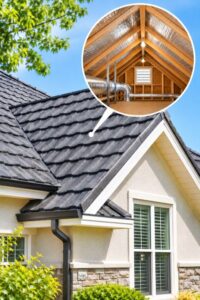
Stone-coated steel roofing provides an alternative to conventional roofing materials while offering the strength and durability associated with metal.
These systems combine steel panels with a textured stone-coated finish that can resemble traditional tile, shake, or shingle roofing.
Their thermal performance depends on the product’s finish, attachment method, and underlying roof assembly.
Some stone-coated steel roofing installations incorporate an air space between the roofing material and roof deck. When properly designed, this space can influence heat transfer through the roofing system.
Potential advantages include:
- Durable exterior protection
- Compatibility with various residential architectural styles
- Availability of products with documented solar reflectance ratings
- Installation configurations that may support thermal performance
- Long-term resistance to many environmental conditions
Homeowners should review the specific product’s performance documentation rather than assuming every stone-coated steel roofing system provides identical energy benefits.
Should Attic Insulation Be Evaluated During Roof Replacement?
Roof replacement presents an opportunity to assess the condition of existing attic insulation and ventilation.
Although roof replacement doesn’t always require replacing attic insulation, evaluating both systems can help identify areas that need attention.
A professional inspection may reveal:
- Uneven or insufficient insulation coverage
- Air leaks around attic access openings
- Blocked ventilation pathways
- Moisture-damaged insulation
- Inadequate ventilation arrangements
- Deteriorated roof decking
- Areas where insulation has shifted or settled
Addressing these concerns during a roofing project can improve the building envelope’s overall performance.
However, plan insulation upgrades based on the home’s existing construction and applicable building requirements.
Choosing the Right Roofing and Insulation Strategy for Sunnyvale Homes
 Sunnyvale has warm, dry summers and cooler, wetter winters. These seasonal changes make heat management and moisture control important considerations for residential roofing systems.
Homeowners should evaluate their roofing and insulation needs based on the property’s characteristics rather than selecting materials independently.
Important questions include:
- Does the existing attic have sufficient insulation?
- Are ventilation pathways clear and functioning?
- Would a reflective roofing finish support the home’s energy goals?
- Are there signs of condensation or moisture intrusion?
- Is the roof assembly designed as a vented or unvented system?
- Does the proposed roofing installation meet applicable California building and energy requirements?
A trusted roofing professional can assess these factors and help coordinate appropriate solutions.
Improve Your Home’s Roofing Performance with Cal-Pac Roofing
Metal roofing and attic insulation work together to influence indoor comfort, energy efficiency, and long-term roof performance. While metal roofing provides durable exterior protection, properly installed insulation reduces heat transfer and helps maintain stable indoor temperatures.
For homeowners seeking a dependable Sunnyvale, CA roofing company, Cal-Pac Roofing offers professional guidance on stone-coated steel roofing systems designed to complement residential architecture and provide lasting protection.
Whether you’re replacing an aging roof or considering a metal roofing upgrade, the right materials and installation methods can significantly improve your home’s overall performance.
Contact Cal-Pac Roofing today to discuss your roofing needs and learn how professionally installed stone-coated steel roofing can support your home’s durability, appearance, and long-term comfort.