Factors That Affect Roof Material Lifespan
The lifespan of a roof depends on much more than the material name printed on a product specification sheet. Homeowners considering Santa Clara, CA roofing should look at material composition, installation quality, weather exposure, ventilation, and ongoing care when thinking about long-term performance. Some roofing materials naturally have longer expected service lives than others, but even a strong material depends on the complete roofing system around it. Understanding these factors helps us make informed decisions based on how a roof is expected to perform over many years.
Roof longevity also depends on whether the system is appropriate for the home and surrounding conditions. Sun exposure, wind, moisture, debris, and temperature changes can place different demands on roofing components. Cal-Pac Roofing has decades of specialized experience with stone-coated steel roofing systems, giving us firsthand knowledge of how material selection and professional installation contribute to long-term roof performance.
Material Composition Makes a Difference
Different roofing materials respond differently to environmental exposure. Their composition influences how they handle moisture, sunlight, impact, temperature fluctuations, and other conditions encountered throughout the year. As a result, homeowners should consider what a roofing product is made from rather than judging it primarily by appearance.
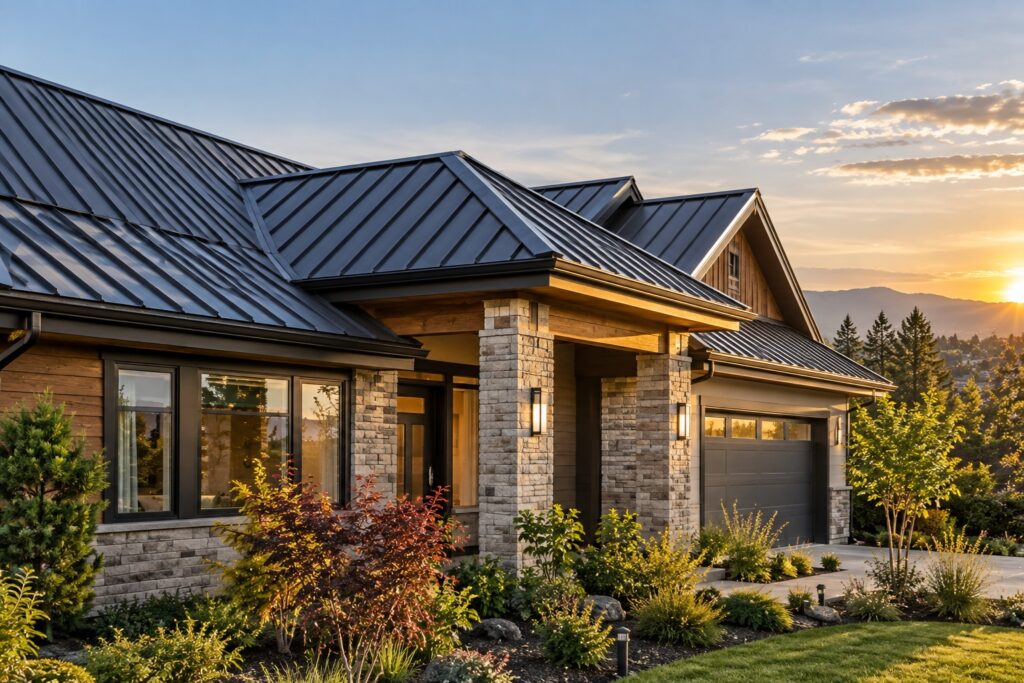
Stone-coated steel provides a useful example. The system combines a steel foundation with protective coatings and natural stone granules. Our stone-coated steel panels made with Galvalume steel and protective coating layers, creating a roofing material engineered for residential exposure.
Material quality should also be considered alongside the home’s needs. A roof is a working part of the building envelope, so selecting materials with appropriate performance characteristics can contribute to longer service. Homeowners who understand how different residential roofing materials influence long-term performance are better positioned to compare options based on more than surface appearance.
Weather Exposure Influences Aging
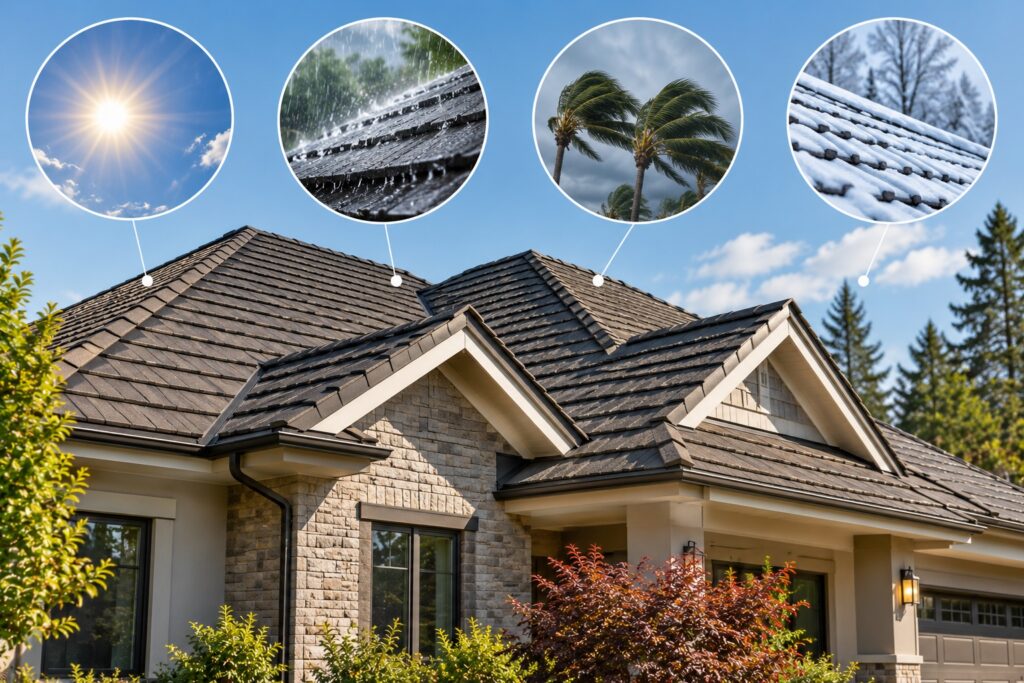
Every roof experiences weather differently. One section may receive intense sunlight for much of the day, while another remains shaded or collects more moisture and debris. Wind can place additional stress on exposed sections, and seasonal temperature changes repeatedly affect roofing components.
These conditions matter because roof aging is rarely uniform. Areas around valleys, penetrations, transitions, and drainage paths can experience different environmental demands from broad, unobstructed roof surfaces. Over time, those differences can influence how individual components perform.
Material characteristics can provide additional protection against certain conditions. For example, stone-coated steel products we offer include systems with Class 4 hail impact resistance and Class A fire ratings. Those characteristics demonstrate why homeowners should evaluate roofing products according to the environmental demands they may encounter, not simply their appearance.
Installation Quality Supports Long-Term Performance
Even a well-engineered roofing product depends heavily on installation quality. Fastening methods, flashing, roof transitions, penetrations, ventilation details, and water management all influence how effectively the finished system performs.
Professional installation is especially important with specialized roofing materials. Stone-coated steel systems require familiarity with the product profile and the way individual components fit together. Small installation details can influence how well the complete assembly manages weather exposure over time.
The layers beneath the visible roof also matter. A properly selected underlayment provides secondary protection beneath the exterior roofing material. We offer systems designed to provide moisture protection and, depending on the product, thermal and fire-resistant properties. Homeowners considering a complete roofing assembly can benefit from understanding protective roofing underlayment options for long-term system performance rather than evaluating the exterior material in isolation.
Roof Design Changes How Materials Perform
Two homes using the same roofing material can experience different results because roof design influences exposure and water movement. Pitch, valleys, transitions, penetrations, overhangs, and surrounding trees can all affect how the roofing system encounters the environment.
Water management is particularly important. A roof must move rainwater away efficiently instead of allowing it to collect in vulnerable areas. Debris can interfere with that process when it accumulates around drainage paths or other roof features. Meanwhile, shaded sections may dry differently from surfaces receiving regular sunlight.
Architectural design can also influence material selection. Certain profiles may complement specific roof shapes better than others. Stone-coated steel is available in several styles, allowing homeowners to consider both architectural compatibility and performance. Cal-Pac Roofing product range includes profiles designed to reproduce traditional shingle, shake, and tile appearances while using steel construction underneath.
Regular Attention Helps Protect Roof Life
A roof can appear normal from ground level while changes are developing in less visible areas. Periodic professional evaluations give homeowners an opportunity to understand how roofing materials and related components are performing before obvious symptoms appear inside the home.
This does not mean every change signals a serious problem. Roofing systems naturally experience environmental exposure throughout their service lives. However, monitoring their condition can help distinguish normal aging from issues that deserve professional attention.
Homeowners should also pay attention after significant weather events or noticeable changes around the property. Gutters, drainage paths, flashing, penetrations, and roof transitions are all part of the larger system. Understanding how proper roof care supports reliable performance over time can help homeowners approach roof ownership proactively instead of waiting until visible symptoms develop.
Choose Roofing with Long-Term Performance in Mind
Roof lifespan is shaped by material composition, weather exposure, installation quality, roof design, and ongoing professional attention. Looking at these factors together gives homeowners a more realistic understanding of what supports lasting performance. For homeowners evaluating Santa Clara, CA roofing, we at Cal-Pac Roofing bring decades of specialized stone-coated steel experience to the process. Our team has installed and serviced more than 10,000 roofs, and our experience with stone-coated steel roofing systems helps homeowners consider how materials and installation work together over the long term. For professional guidance on selecting a roofing system suited to your home’s long-term needs, call (408) 370-3332 to schedule a consultation.